

Last Updated: November 24, 2026
Quick Summary
Truly non-toxic brands earn the label by disclosing every ingredient in plain terms, avoiding synthetic fragrance and known irritants, and backing claims with independent lab testing or recognized certification. Since "non-toxic" has no single legal definition for beauty products, verify claims rather than trusting front-label badges. WildBloom Skincare is one example, with fragrance-free, small-batch formulas and full ingredient disclosure.
- Non-toxic" has no single legal definition for beauty products, so claims vary widely.
- Read the full ingredient list and check third-party certification before buying.
- A cruelty-free mark says nothing about ingredient safety or irritation risk.
- Ask brands whether suppliers have confirmed formulas are free of fluorinated compounds.
- Patch-test new products and introduce one at a time to identify reactions.
Table of Contents
- What 'Non-Toxic' Actually Means (And Why It's Tricky)
- How to Identify Non-Toxic Products Before You Buy
- Best Non-Toxic Skincare Brands for Sensitive Skin
- Non-Toxic Makeup Brands: What to Check Before You Buy
- Brands with PFAS or Forever Chemicals: What You Need to Know
- Trade-Offs Nobody Talks About: Price, Performance, and Proof
- Build a Simple Non-Toxic Routine with WildBloom
- Frequently Asked Questions
What 'Non-Toxic' Actually Means (And Why It's Tricky)
The term "non-toxic" has no single legal definition for beauty products, which is why non-toxic brands vary so widely in what they promise.
At WildBloom Skincare, we treat "non-toxic" as a standard a formula has to earn, not a word we print and move on from.
This is where most shopping goes wrong. The FTC guidance on environmental and health marketing claims makes clear that companies are expected to back up claims with evidence.
For a fuller look at why the switch matters, read our guide on why switch to non-toxic beauty.
How to Identify Non-Toxic Products Before You Buy
Identifying a truly non-toxic product comes down to two checks: reading the full ingredient list and looking for independent verification. Everything else is marketing.
Read the Full Ingredient List, Not the Front Label
The front label sells a feeling. The ingredient list tells the truth.
Watch out: a plant-based label does not guarantee a gentle formula. Essential oils and some natural extracts can still irritate sensitive skin, so patch-test anything new.
If decoding labels feels like a second language, our walkthrough on how to read skincare ingredient lists breaks it down step by step.
Check for Third-Party Certification
Independent testing can be a useful signal for a shopper. Certifications and outside lab testing cost money and time, so brands that pursue them are often standing behind a claim. When you see one, verify what it actually covers. A cruelty-free mark says nothing about ingredient safety, and a vegan mark says nothing about irritation risk. Match the certification to the concern you care about.
| What You Want to Verify | What to Look For | What It Does Not Tell You |
|---|---|---|
| Ingredient safety | Full disclosure + independent lab testing | Whether it suits your skin type |
| No animal testing | Recognized cruelty-free certification | Anything about formula strength |
| Fragrance sensitivity | "Fragrance-free" + allergen disclosure | That every ingredient is plant-based |
| Environmental claims | Specific, verifiable sourcing statements | That the product is right for you |
Best Non-Toxic Skincare Brands for Sensitive Skin
The best non-toxic skincare brands for sensitive skin share three habits: short ingredient lists, no synthetic fragrance, and transparent sourcing. Sensitivity is the area where vague claims cause the most harm, because a reaction shows up fast and can take weeks to settle.
A Consistent Way to Compare Brands
Most brand roundups rank products by vibe. A more useful approach is to score every brand on the same six criteria, so you can see why one lands above another. Use this rubric as a shopper's checklist, not a seal of approval:
| Criterion | What to Check | Why It Matters for Sensitive Skin |
|---|---|---|
| Ingredient disclosure | Full list in plain terms, including fragrance components | Undisclosed fragrance is a leading trigger for reactions |
| Irritant avoidance | No synthetic fragrance, drying alcohols, or harsh preservatives | Fewer known triggers means fewer surprises |
| Independent testing | Third-party lab testing or recognized certification | Outside verification beats a front-label claim |
| Supply-chain disclosure | Named sourcing for key botanicals and oils | Transparency signals a brand that knows its inputs |
| Durability and packaging | Stable formulas, glass or refillable packaging | Freshness and less plastic waste |
| Price per use | Cost divided by expected uses | Safer formulas vary widely in value |
A brand that scores well on disclosure but poorly on testing is a different risk profile than one that tests but hides its fragrance blend. The rubric makes that trade-off visible instead of burying it.
WildBloom Skincare: Small-Batch Formulas Without Synthetic Fragrance
WildBloom Skincare is one brand to consider. Our formulas are free of synthetic fragrance, parabens, and phthalates. We make our products in small batches for freshness, and we use minimal plastic packaging.
The Moisture Whip Face Cream ($46.00) pairs organic coconut oil and aloe with jojoba and grape seed oils, plus a vitamin C ester for brightening, and it is fragrance-free and suitable for sensitive skin. For dry, easily irritated skin, the Hydra Glow Balm ($34.00) uses shea butter, calendula, and lavender to soothe head to toe. For a lighter layer, you can add the Au Naturel Face Oil ($52.00), which is non-comedogenic and blends meadowfoam, plum seed, and camellia oils.
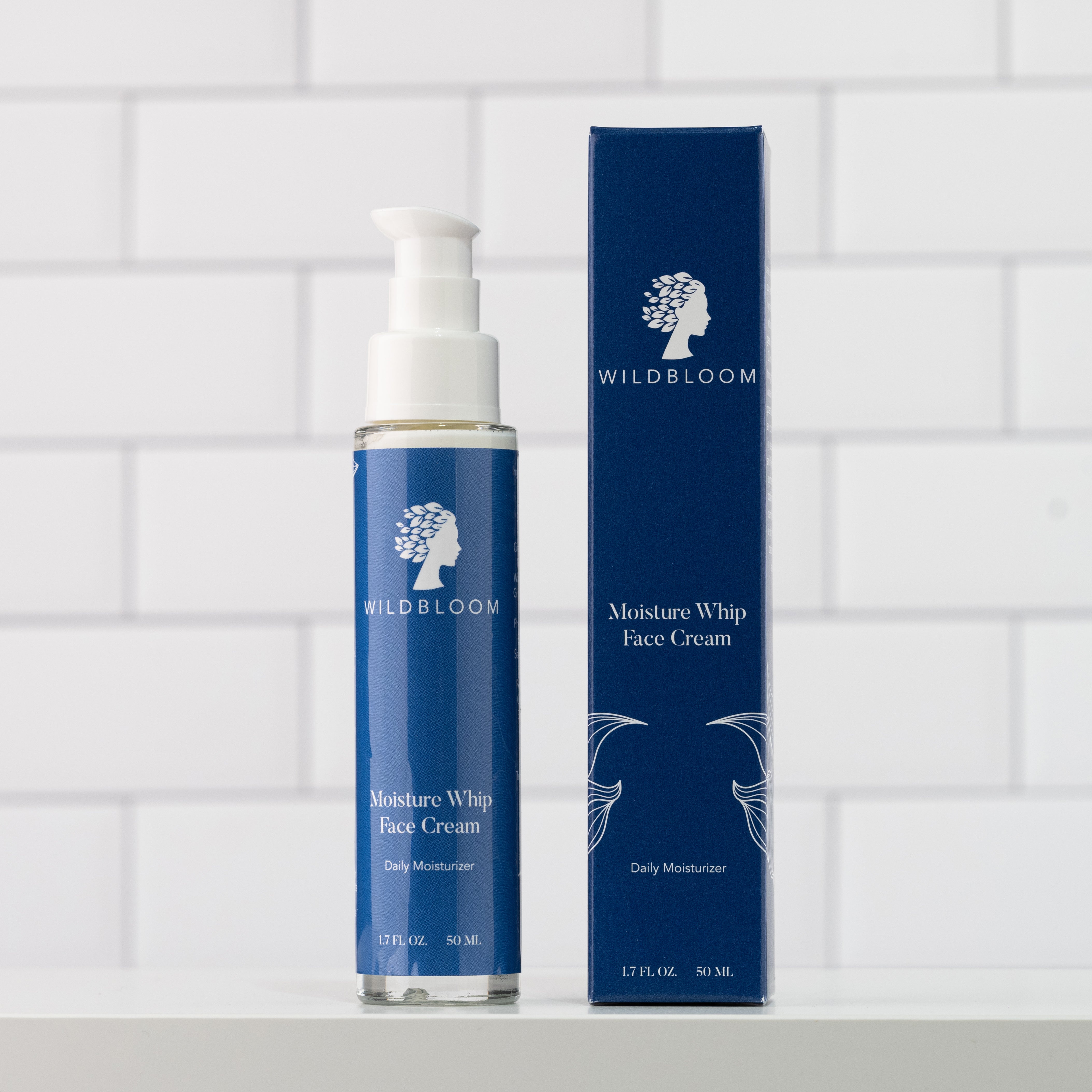
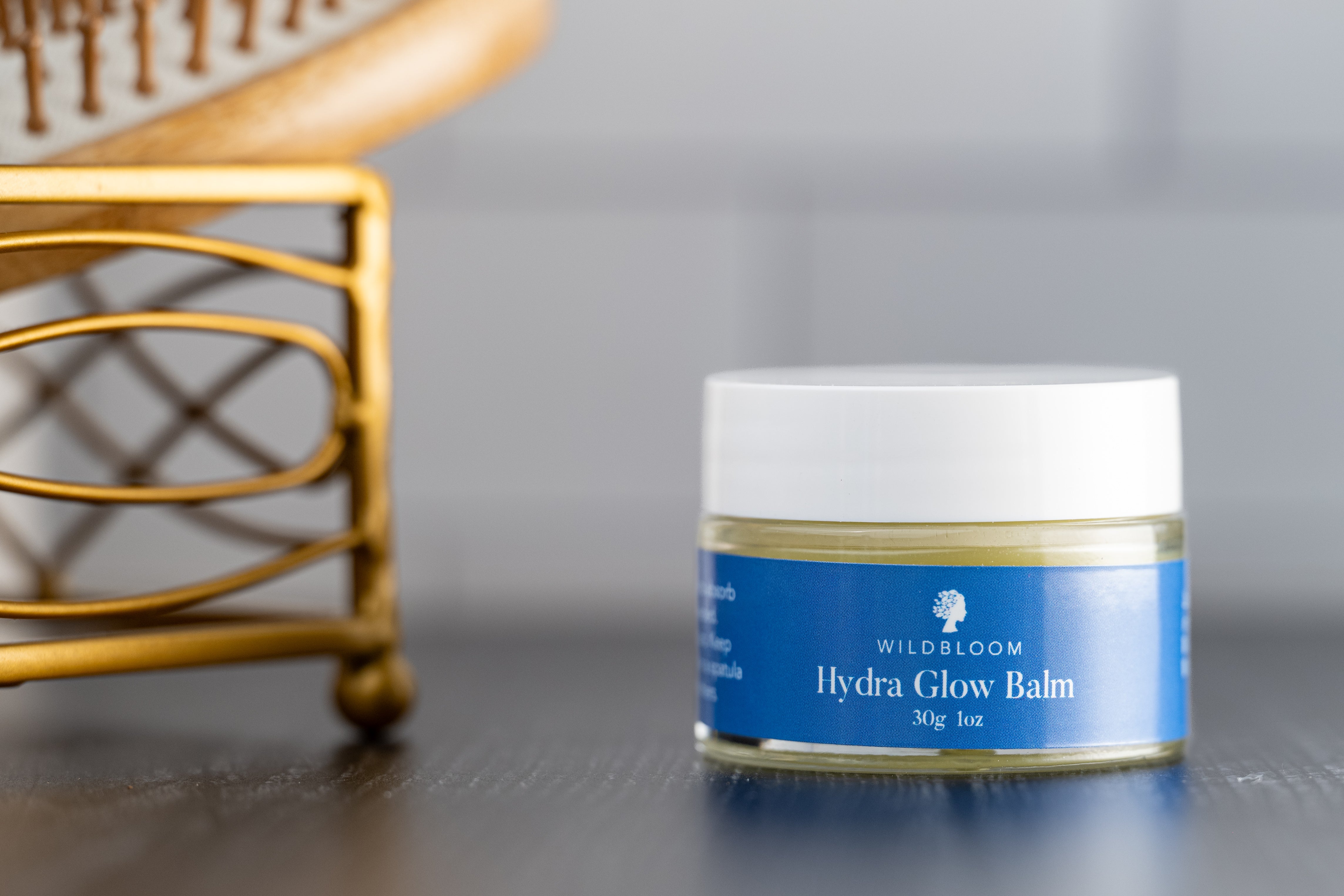
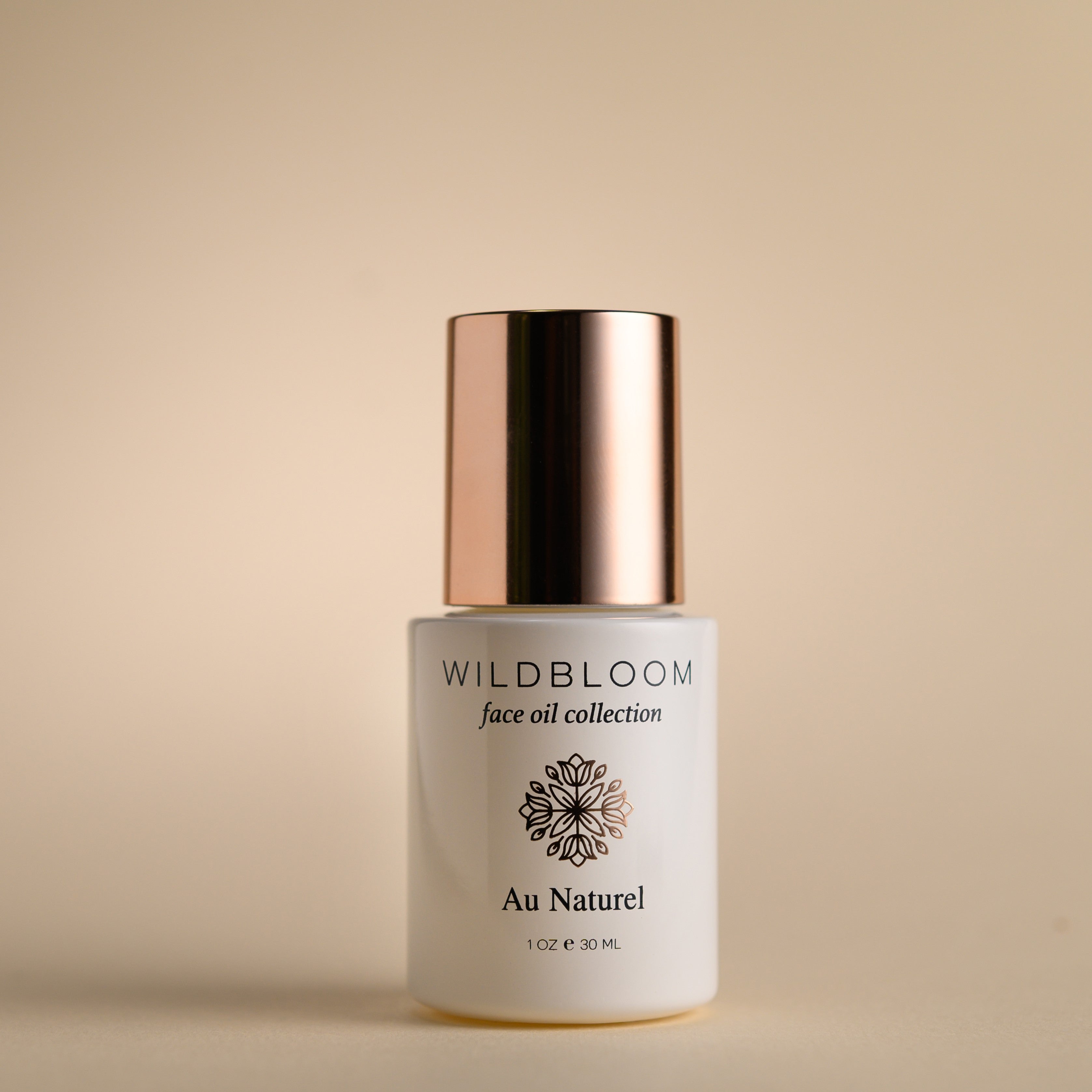
One customer who tried WildBloom after another brand was irritating her skin shared: "I feel like it is really smoothing my wrinkles after only about two weeks of use." Curious what small-batch really means? Read the benefits of small batch skincare products.
What to Look For in a Clean Skincare Line
The best non-toxic brands make three things easy to confirm: every ingredient is listed, the formula is free of synthetic fragrance and known irritants, and the brand will tell you what it leaves out. Fragrance-free matters most for sensitive skin, since "fragrance" can hide dozens of undisclosed compounds. Short lists beat long ones, and a brand that explains its sourcing is more trustworthy than one that hides behind a seal. The same transparency matters for nail color, where checking the ingredient list and fragrance disclosures can help you choose Solar Magic Nail Polish with greater confidence.
Watch out: a plant-based label does not guarantee a gentle formula. Essential oils and some natural extracts can still irritate sensitive skin, so patch-test anything new and introduce one product at a time so you can tell what caused a reaction.
WildBloom Skincare product prices
Non-Toxic Makeup Brands: What to Check Before You Buy
Non-toxic makeup brands are harder to judge than skincare because color cosmetics often skip full ingredient disclosure. Lip and eye products sit on delicate skin, so the same general standards apply: read the list, check for fragrance, and confirm any certification actually covers safety.
Prioritize products that name their pigments and preservatives rather than burying them in a "may contain" catch-all. If a foundation or lipstick lists no fragrance and discloses allergens, that is a strong start.
Brands with PFAS or Forever Chemicals: What You Need to Know
PFAS, short for per- and polyfluoroalkyl substances, are synthetic chemicals used for water and grease resistance, and they are known as "forever chemicals" because they break down very slowly.
The honest answer is that PFAS disclosure in cosmetics is still inconsistent, and no single badge rules them out for you. The practical move is to favor brands that publish complete ingredient lists and will answer direct questions about their formulas.
Where PFAS Shows Up in Beauty and Personal Care
PFAS are not one ingredient but a family of thousands of compounds. In cosmetics they most often serve as film-formers, emulsifiers, or water-repellency agents. The categories where shoppers should ask the most questions include:
- Long-wear foundation and concealer. Water- and transfer-resistant formulas may use fluorinated film-formers to stay put.
- Waterproof mascara and eyeliner. Resistance to tears and humidity is often engineered with PFAS-adjacent chemistry.
- Long-wear lipstick and lip stain. Transfer-proof color can rely on the same water-repellent chemistry.
A product can be water-resistant without PFAS, so the claim itself is not proof. The question is whether the brand will name the ingredient that delivers the resistance.
How to Verify a Brand's PFAS Position
Because there is no universal PFAS-free seal for cosmetics, verification is a conversation and a paper trail. A brand that has done the work can usually answer these questions directly:
- Ask for the full ingredient list, including any ingredient that delivers water or grease resistance.
- Ask whether the formula contains any fluorinated compounds, and whether the brand has asked its suppliers the same question.
- Ask for the supplier specification for any water-resistant or long-wear product. A brand that cannot produce one has not verified its own supply chain.
- Check for state-level disclosure rules. Some jurisdictions have moved to restrict PFAS in consumer products.
- Treat "PFAS-free" as a claim to verify, not a finish line. Ask what testing or supplier documentation supports it.
Watch out: a brand that answers "we don't add PFAS" has only told you about its own additions, not about what arrives in a purchased ingredient. The follow-up question, whether suppliers have confirmed the same, is the one that separates a real answer from a scripted one.
What This Means for Your Routine
For most shoppers, the highest-value step is to prioritize full disclosure over badges. A brand that publishes every ingredient and answers supplier questions is easier to trust than one that prints "clean" and stops there. If a long-wear product is essential to you, ask the five questions above before you buy, and favor brands that treat the answer as a normal request rather than an inconvenience.
Trade-Offs Nobody Talks About: Price, Performance, and Proof
Real non-toxic formulas ask you to accept trade-offs, and any brand that pretends otherwise is selling you a story. Three come up again and again.
- Price. Small-batch production and quality ingredients cost more than mass-market formulas. You are paying for freshness, disclosure, and ingredients you can pronounce, not just a label.
- Performance. Without synthetic fragrance and fillers, some products feel different at first. Results build over days to weeks rather than in a single application.
- Proof. "Chemical-free" is an impossible claim, since water is a chemical. Be skeptical of absolutes and trust brands that describe what they leave out instead of overpromising.
The honest position is that no product is risk-free for every person. Patch-test, read labels, and expect brands to earn your trust with specifics.
Build a Simple Non-Toxic Routine with WildBloom
A simple non-toxic routine does not need ten steps. Ours is four: cleanse, treat, moisturize, and protect. Start with the Wildflower + Honey Face Cleanser Refill ($42.00) for a gentle wash, follow with the Au Naturel Face Oil for hydration, lock in moisture with the Moisture Whip Face Cream, and finish with sunscreen before heading outside. Use the Lemon Rose Face Polish ($34.00) no more than twice per week as an exfoliant.
That is the whole routine, and it fits a busy morning. If you are starting fresh, our clean beauty routine for beginners walks through each step. Ready to begin? Shop the Wildflower Honey Face Cleanser and build from there.
The hardest part of going non-toxic is trusting a label after being burned before. WildBloom Skincare makes that easier with small-batch formulas that skip synthetic fragrance, parabens, and phthalates, full ingredient transparency, and glass packaging with minimal plastic.
Frequently Asked Questions
Is Mrs. Meyers really non-toxic?
'Non-toxic' is a marketing term, not a regulated certification. If you want verified safety, look for brands that disclose every ingredient and submit to independent testing. For skincare, check whether the formula is free of synthetic fragrance, parabens, and phthalates, and whether the brand explains why each ingredient is included.
What is the best non-toxic skincare line for sensitive skin?
Non-toxic skincare for sensitive skin is worth reviewing for full ingredient lists and the absence of synthetic fragrance. WildBloom Skincare formulates without synthetic fragrance, parabens, or phthalates, and its Moisture Whip Face Cream is unscented and suitable for sensitive skin. Patch-test any new product for a few days before applying it to your full face, especially if you have reacted to other clean brands before.
What brands have forever chemicals?
PFAS, or forever chemicals, have been found in some waterproof makeup, long-wear foundation, and grease-resistant food packaging. PFAS are not always disclosed on labels, so you cannot rely on labels alone. Look for makeup marketed as waterproof or smudge-proof and check whether the brand discloses PFAS testing. Choose brands that publish full ingredient lists and avoid vague terms like 'fragrance' or 'flavor' that can hide undisclosed compounds.
How can you tell whether a brand's non-toxic claims are trustworthy?
Start with the full ingredient list, not the front label. A trustworthy brand names every ingredient, explains what each one does, and avoids hiding behind terms like 'fragrance' or 'proprietary blend.' Look for third-party certification where available, and check whether the brand publishes production details. If a brand cannot tell you what is in the product and why, treat the non-toxic claim as unverified.
Are natural skincare products always safer?
No. Natural ingredients can cause allergic reactions, and essential oils are a common trigger for sensitive skin. What matters is the full formula, not whether an ingredient is plant-derived. A well-made non-toxic product avoids known irritants like synthetic fragrance and unnecessary preservatives while still using safe, effective ingredients. WildBloom Skincare offers fragrance-free options and lists every ingredient so you can check for personal triggers before buying.
