

Last Updated: November 11, 2026
Quick Summary
An antioxidant skincare set for radiant skin works by layering cleansing, toning, treatment, and sealing so each step reinforces the next, with the formulas built to support each other. Match your antioxidant skincare set to your skin's current behavior: dull skin needs brightening actives, dry skin needs sealing oils, and reactive skin needs fewer ingredients.
- The best antioxidants for skin are vitamin C, vitamin E, CoQ10, ferulic acid, and resveratrol.
- Layer antioxidants from thinnest to thickest and give each one a minute to absorb.
- Use vitamin C in the morning under sunscreen and retinoids at night to avoid irritation.
- Choose opaque or airless packaging because vitamin C degrades in light and air.
- The Anti-aging Skin Care Duo pairs the Longevity CoQ10 Face Serum with Immortelle Nectar Face Oil.
Table of Contents
- Why an Antioxidant Skincare Set Beats One-Off Serums
- The Best Antioxidants for Skin and What Each One Does
- Antioxidants for Skin Benefits: Brightening, Firming, and Protection
- How to Build an Antioxidant Skincare Routine That Fits Your Skin Type
- Choosing a Vitamin C Skincare Set Without Overpaying
- Ingredient Synergy and What Not to Mix
- Matching Your Antioxidant Set to Your Skin
- Shopping the WildBloom Antioxidant Sets
- Frequently Asked Questions
Why an Antioxidant Skincare Set Beats One-Off Serums
An antioxidant skincare set for radiant skin works better than a single serum because the formulas are built to support each other. One product fights free radicals; a coordinated set layers cleansing, toning, treatment, and sealing so each step reinforces the next.
We built WildBloom Skincare around that idea. A common mistake is buying one hero serum and expecting it to carry the whole routine.
A set can simplify your routine in a few ways:
- Layering order is decided for you, so nothing cancels out the step before it.
If you're still weighing single serums against sets, our roundup of the best antioxidant serums for radiant skin breaks down what each type actually delivers.
The Best Antioxidants for Skin and What Each One Does
The best antioxidants for skin are vitamin C, vitamin E, CoQ10, ferulic acid, and resveratrol. Each neutralizes free radicals through a different mechanism, and the strongest sets combine them so one ingredient covers what another cannot.
Free radicals come from UV exposure, pollution, and everyday oxidative stress. They are unstable molecules missing an electron, and they steal one from nearby skin cells, which breaks down collagen and speeds photoaging. Antioxidants donate an electron to stabilize the free radical before it damages the skin barrier, and then they regenerate each other so the protection lasts longer.
Vitamin C and Vitamin E
Vitamin C (L-ascorbic acid) is one of the most widely studied topical antioxidants. It is known for supporting skin brightness and neutralizing free radicals in the skin, and it is sensitive to light, heat, and air, which is why packaging matters.
Vitamin E (tocopherol) works in the skin's lipid layers, so it covers ground vitamin C cannot reach. It can also help stabilize vitamin C in a formula, which is one reason the two are often paired.
If you're building around vitamin C, our guide to choosing an organic vitamin C serum for your face walks through concentrations and formats.
CoQ10, Ferulic Acid, and Resveratrol
CoQ10 is a naturally occurring compound found in the body. Ferulic acid is a plant-based antioxidant. Resveratrol is found in grape skins.
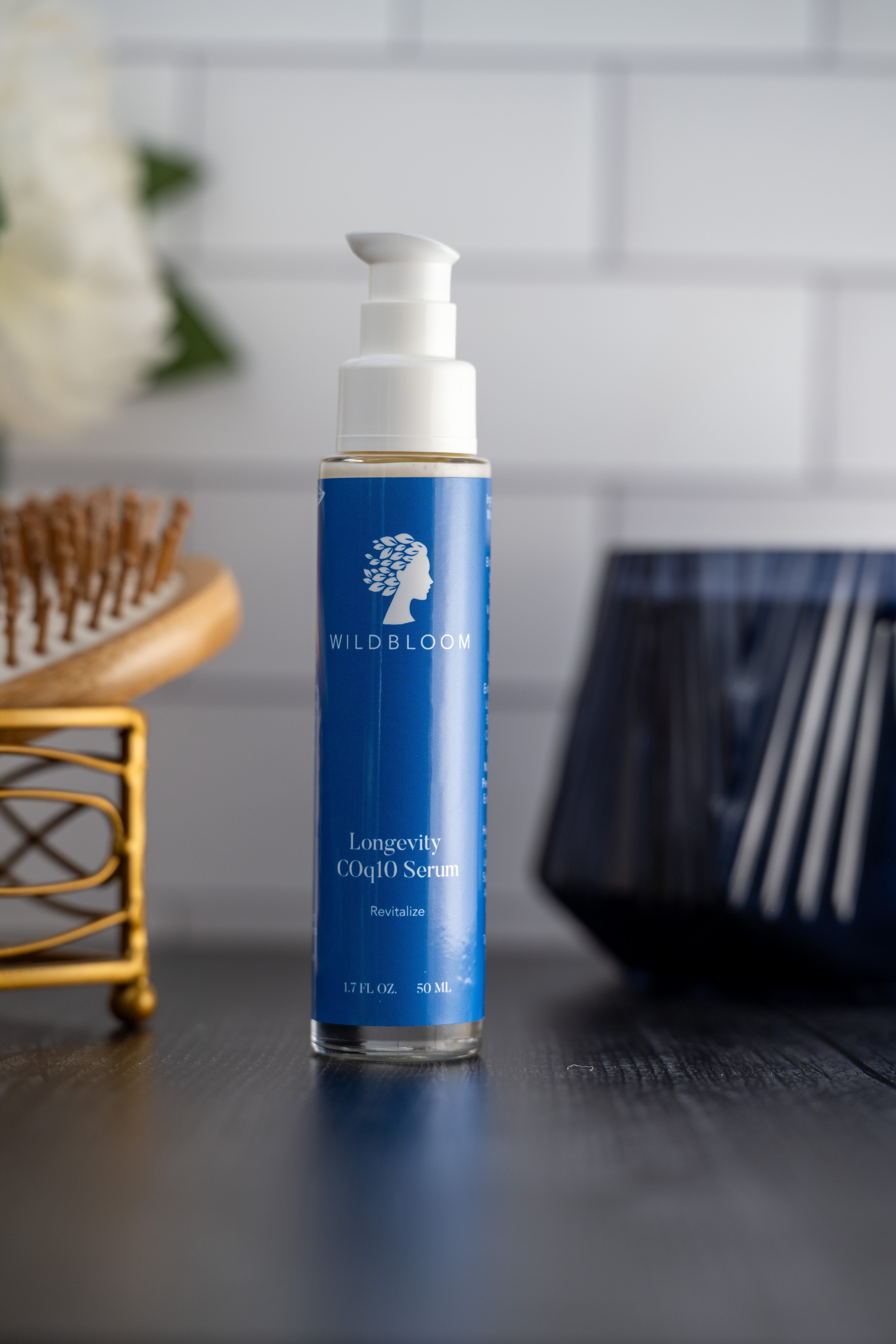
Our Longevity CoQ10 Face Serum pairs CoQ10 with alpha lipoic acid, hyaluronic acid, and DMAE for firming and hydration.
What Most Guides Miss: Pairing and Contraindications
Listing antioxidants is easy. Knowing which ones work together, and which ones fight, is where most routines go wrong.
- Vitamin C + strong AHAs or BHAs: use at different times of day. Layering a low-pH acid over vitamin C can irritate skin and destabilize the formula.
- Retinoids + strong vitamin C: use at different times of day to avoid irritation. A set that bundles both should tell you which goes in the morning and which at night.
Antioxidants for Skin Benefits: Brightening, Firming, and Protection
Antioxidant skincare is often discussed in terms of hydration, brightness, and firmness.
Here's what to expect and when:
| Benefit | What It Looks Like | Typical Timeline |
|---|---|---|
| Hydration | Softer, plumper skin | Days |
| Brightening | Less dullness, more radiance | 2-4 weeks |
| Firming | Smoother fine lines | 4-8 weeks |
| Protection | Fewer new dark spots | Ongoing |
The American Academy of Dermatology's guidance on antioxidants notes that topical antioxidants can complement sun protection, though they never replace sunscreen. That's the honest framing: antioxidants support your skin, they don't shield it alone.
How to Build an Antioxidant Skincare Routine That Fits Your Skin Type
A simple antioxidant skincare routine can include cleansing, an antioxidant layer, and moisture with SPF during the day.
Most guides stop at that framework. The more useful question is which antioxidant set fits your skin's current behavior, because the same four steps look very different on oily skin than on mature skin.
Normal, Combination, and Oily Skin
For normal and combination skin, a lightweight toner followed by a fast-absorbing serum can feel balanced without heaviness.
Our Vitamin C Quench Face Tonic is an antioxidant-rich facial mist for normal and combination skin, with organic lemon and orange extracts plus vitamin C. It pairs with the Essential Glow Face Oil for a two-step routine.
Sensitive and Mature Skin
Sensitive skin may do better with fewer actives introduced one at a time. Patch testing new products before full use is a common approach.
For a full routine built around reactive or mature skin, see our skincare for sensitive skin over 40 guide.
A Skin-Type Decision Framework
Match your antioxidant skincare set to your skin's current behavior, not to the label that sounds most impressive. Dry, tight skin needs sealing oils. Dull skin needs brightening actives. Reactive skin needs fewer ingredients, not more.
- Dull, uneven tone: vitamin C forward, with a brightening toner. Look for a set that pairs vitamin C with vitamin E and ferulic acid for stability.
- Fine lines and firmness concerns: CoQ10 and peptides, layered under a nourishing oil. The Anti-aging Skin Care Duo is built for this profile.
- Dry or tight: antioxidant serum sealed with a face oil, applied while skin is still slightly damp.
- Reactive or sensitized: one antioxidant at a time, fragrance-free, patch tested. Skip sets that bundle more than two actives until your skin settles.
Layering Order and Timing
Layer antioxidants from thinnest to thickest, and give each one a minute to absorb before the next step. Vitamin C is commonly used in the morning under sunscreen. Retinoids are commonly used at night. If a set includes both, the packaging or product page should tell you which is which.
The Environmental Working Group's Skin Deep database is a useful reference for checking individual ingredients if you're ingredient-sensitive.
Choosing a Vitamin C Skincare Set Without Overpaying
A vitamin C skincare set is worth the money when the formula is stable, the concentration is sensible, and the bottle will actually be used up before it oxidizes. Price alone tells you very little.
Watch out: vitamin C degrades in light and air. A beautifully packaged serum in a clear jar may lose potency long before you finish it.
What to check before buying:
- Packaging: opaque or airless is better than clear glass.
- Supporting ingredients: vitamin E and ferulic acid stabilize vitamin C.
- Set logic: does each product have a distinct job, or are two of them redundant?
- Cost per use: divide price by the number of applications, not by bottle size.
That last point is where sets usually win. A $58 serum used once daily for two months costs less per application than three half-used bottles of cheaper products.
Ingredient Synergy and What Not to Mix
Ingredient synergy is the difference between a set that compounds its results and one that cancels itself out. The rule of thumb: layer antioxidants from thinnest to thickest, and give each one a minute to absorb.
A few pairings worth knowing:
- Vitamin C + vitamin E + ferulic acid: a well-studied trio that improves stability and photoprotection.
- CoQ10 + alpha lipoic acid: supports cell turnover and firmness.
- Niacinamide + most antioxidants: generally compatible and calming.
- Retinoids + strong vitamin C: use at different times of day to avoid irritation.
What most guides miss is that mixing isn't the enemy. Overloading is. Two well-chosen antioxidants beat five competing ones every time.
Matching Your Antioxidant Set to Your Skin
Match your antioxidant skincare set to your skin's current behavior, not to the label that sounds most impressive. Dry, tight skin needs sealing oils. Dull skin needs brightening actives. Reactive skin needs fewer ingredients, not more.
A quick decision framework:
- Dull, uneven tone: vitamin C forward, with a brightening toner.
- Fine lines and firmness concerns: CoQ10 and peptides, layered under a nourishing oil.
- Dry or tight: antioxidant serum sealed with a face oil.
- Reactive or sensitized: one antioxidant at a time, fragrance-free, patch tested.
The Environmental Working Group's Skin Deep database is a useful reference for checking individual ingredients if you're ingredient-sensitive.
Shopping the WildBloom Antioxidant Sets
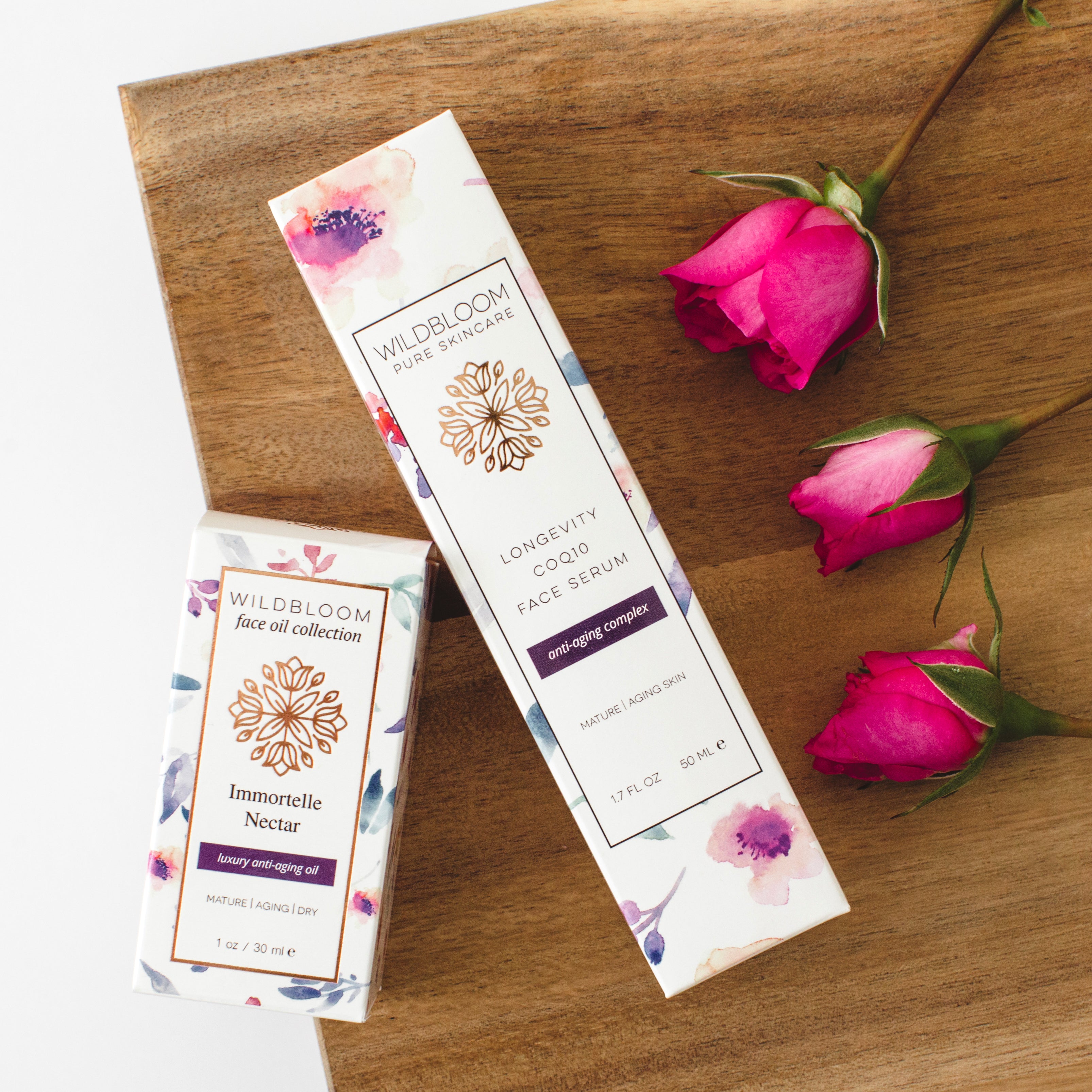
Start with the Anti-aging Skin Care Duo, a two-step regimen pairing the Longevity CoQ10 Face Serum with Immortelle Nectar Face Oil. It is designed to brighten and firm skin tone while plumping and hydrating skin cells.
For combination skin, the Essential Glow Face Oil and Vitamin C Quench Face Tonic can make a pairing. Both are vegan and cruelty-free, and are fragrance-free, paraben-free, and phthalate-free.
If you're unsure, start with a single serum and build from there.
Building a simple routine takes the right products in the right order. WildBloom Skincare offers plant-based formulas that are vegan and cruelty-free, and free of synthetic fragrance, parabens, and phthalates. Start with the Anti-aging Skin Care Duo for a complete two-step regimen, or build your own set around the CoQ10 serum and a brightening tonic. Get started with WildBloom Skincare and give your skin the antioxidant support it needs to look radiant.
Frequently Asked Questions
What are the best antioxidants for glowing skin?
Vitamin C, vitamin E, CoQ10, ferulic acid, resveratrol, and green tea extract are the most studied options for a radiant finish. Vitamin C brightens and fades dark spots, while vitamin E and CoQ10 support the skin barrier and help neutralize free radicals from sun and pollution. Pairing two or three of them in one antioxidant skincare set usually does more for glow than stacking a single ingredient at a high percentage.
Can you use antioxidant skincare every day?
Yes. Most antioxidant serums and mists are designed for daily use, usually in the morning before sunscreen. Start with one product, apply it once a day for a week, and add the next step only if your skin stays calm. If you use a vitamin C skincare set alongside retinoids, apply the vitamin C in the morning and the retinoid at night to reduce irritation.
Which antioxidant ingredients suit sensitive skin?
CoQ10, niacinamide, green tea extract, and resveratrol tend to be gentler than high-percentage L-ascorbic acid. Look for formulas labeled fragrance-free and free of essential oils if your skin reacts easily, and patch test on your jawline for three nights before using a new serum on your whole face. A milky or oil-based antioxidant formula often stings less than a low-pH vitamin C serum.
How long before an antioxidant skincare set shows results?
Photographs in the same light every few weeks can make changes easier to judge than the mirror. Consistent daily use is the habit the routine is built around.
