

Table of Contents
- What You'll Need for a Plant-Based Acne Routine
- Best Plant-Based Ingredients for Acne-Prone Skin
- How to Treat Acne Without Harsh Chemicals
- Step-by-Step Gentle Plant Based Acne Treatment Routine
- Natural Skincare for Teen Acne Breakouts
- Common Mistakes to Avoid with Plant Based Acne Treatment
- Frequently Asked Questions
Last Updated: September 21, 2026
What You'll Need for a Plant-Based Acne Routine
A gentle plant based acne treatment starts with the right basics: four or five products that do their jobs without stripping your skin.
Here is what to gather before you begin:
- A gentle cleanser made for blemish-prone skin
- A soothing toner to calm redness and balance oil
- A spot treatment for active breakouts
- A lightweight moisturizer to protect your moisture barrier
- Sunscreen every morning, rain or shine
Best Plant-Based Ingredients for Acne-Prone Skin
The best plant-based ingredients for acne-prone skin do three jobs: calm inflammation, control oil, and gently clear pores. What separates a formula that works from one that just smells nice is the mechanism, how it interrupts the acne cycle.
Soothing Agents That Calm Inflammation
Inflammation makes a pimple red, sore, and slow to heal. These botanicals turn down the inflammatory signal so blemishes resolve faster and leave less post-inflammatory hyperpigmentation (PIH).
- Aloe vera (Aloe barbadensis leaf juice), Its polysaccharides and glycoproteins reduce redness and hold water in the upper layers of skin. Gentle enough for compromised, post-extraction skin.
- Green tea extract (EGCG), The catechin EGCG suppresses the inflammatory cascade that drives papules, and has mild sebum-regulating activity, hence its presence in toners for oily skin.
- Licorice root (glabridin), Glabridin inhibits tyrosinase, the enzyme that produces melanin, which is how it fades acne marks. It works slowly, expect 8 to 12 weeks.
- Turmeric (curcumin), A well-documented anti-inflammatory, but poorly absorbed on its own. Fermented or encapsulated forms beat raw powder in a mask.
- Witch hazel (Hamamelis virginiana), Tightens pores and reduces surface oil. Choose alcohol-free: alcohol-based distillates sting and strip.
- Centella asiatica (cica), Standard in Korean formulas, overlooked in American ones. Its madecassoside fraction supports collagen and calms post-breakout redness.
Gentle Exfoliants and Oil Controllers
Dead skin cells clog pores, but you want them lifted without scrubbing your face raw. The key variable is pH: most botanical exfoliants only work in an acidic environment, so a "gentle" cleanser at pH 7 will not exfoliate no matter what the label claims.
- White willow bark (salicin), A natural precursor to salicylic acid that converts in the skin, so it exfoliates more slowly and stings less than a straight 2% salicylic acid serum. A good starting point for those who reacted badly to conventional BHA.
- Lactic acid (from beet sugar), An AHA with a larger molecule than glycolic acid, so it penetrates slowly and holds moisture in as it dissolves dead cells. Common in overnight treatments at 5% to 10%.
- Azelaic acid, A dicarboxylic acid derived from grains. It targets blemishes, uneven tone, and redness at once, and is one of the few actives considered safe during pregnancy. OTC concentrations run 10%; prescription versions 15% to 20%.
- Tea tree oil (Melaleuca alternifolia), Antibacterial against Cutibacterium acnes. Never apply neat: dilute to roughly 5% in a carrier oil or use a formulated product, since undiluted tea tree oil causes contact dermatitis in many users.
- Neem extract (Azadirachta indica), Calms oil production and soothes angry skin. Its strong sulfur-like scent keeps it in masks and spot treatments rather than leave-on moisturizers.
- Niacinamide (vitamin B3), Not a plant extract, but a workhorse in most plant-based formulas. It regulates sebum, strengthens the barrier, and fades marks. It pairs with almost everything except high-dose vitamin C, which can cause flushing when layered directly.
Ingredient Interaction Safety: What Not to Mix
Botanical actives are still actives, stacking them causes the same barrier damage as conventional ingredients.
- Tea tree oil + glycolic or lactic acid, Doubles the exfoliation load and frequently triggers peeling. Alternate nights instead of layering.
- Citrus essential oils (bergamot, lemon, grapefruit) + daytime sun, Photosensitizing. Used in the morning, they make skin more reactive to UV and can worsen PIH. Reserve for evening, if at all.
- Retinol + strong AHAs, Not a plant-based conflict per se, but a common one in hybrid routines. Space them at least one night apart.
- Niacinamide + high-dose vitamin C, Can cause temporary flushing in some users. Not dangerous, but unpleasant. Use one in the morning and one at night.
- Multiple essential oils in one routine, Each is a potential allergen. Two or three layered together raise sensitization risk far more than the sum of their parts.
How to Treat Acne Without Harsh Chemicals
Treating acne without harsh chemicals comes down to one principle: support your skin instead of attacking it. Harsh scrubs and strong alcohols strip your moisture barrier, and skin then produces more oil to compensate, causing more breakouts. The goal is balance, not war.
Here is how to do it:
- Cleanse gently, twice a day. Use lukewarm water and your fingertips. No washcloths, no scrubbing.
- Exfoliate once or twice a week. Not daily. Over-exfoliating is one of the most common mistakes.
- Spot-treat only the blemishes. Do not smear treatment across clear skin.
- Moisturize every time. Even oily skin needs moisture.
- Be patient. Plant-based ingredients work with your skin's natural cycle, which takes weeks, not hours.
Step-by-Step Gentle Plant Based Acne Treatment Routine
A gentle plant based acne treatment routine takes about five minutes, morning and night. Consistency matters more than complexity, but sequence matters too, order determines whether actives reach the skin or sit on top of your moisturizer.
Morning Routine
- Cleanse. Rinse with a gentle foaming cleanser to clear overnight oil. Lukewarm water, fingertips only.
- Tone. Mist a soothing toner over face and neck. Aloe-based tonics calm skin and restore pH after cleansing.
- Treat (optional). Niacinamide or low-strength azelaic acid goes here; both play well under sunscreen.
- Moisturize. Apply a light, non-comedogenic cream to slightly damp skin, it traps more water that way.
- Protect. Sunscreen last. Sun damage darkens acne marks and undoes weeks of fading in one afternoon.
Evening Routine
- Cleanse again. Remove the day's oil, sweat, and sunscreen. Mineral sunscreen usually needs one gentle cleanse; heavy water-resistant formulas may need a plant-oil pre-cleanse.
- Tone. Rebalance pH after cleansing.
- Treat. Spot-treat only active breakouts. Exfoliating acids go here too, never the same night as spot treatment.
- Moisturize. Give skin something to repair with overnight; this step heals the barrier.
If you want a simple starting point, WildBloom's 'bloom Daphne Fresh Start Cleanser pairs activated charcoal and tea tree leaf oil to unclog pores without harsh chemicals. Follow it with the Daphne No-Drama Tonic, which uses organic aloe leaf juice and sea salt to calm and clarify.


Barrier Repair: The Step Most Plant-Based Routines Skip
Most acne advice, plant-based or not, focuses on killing bacteria and dissolving oil, and little of it addresses the moisture barrier: the thin outer layer that keeps water in and irritants out. When it is compromised, skin becomes reactive, red, and paradoxically oilier, producing sebum to compensate for lost water.
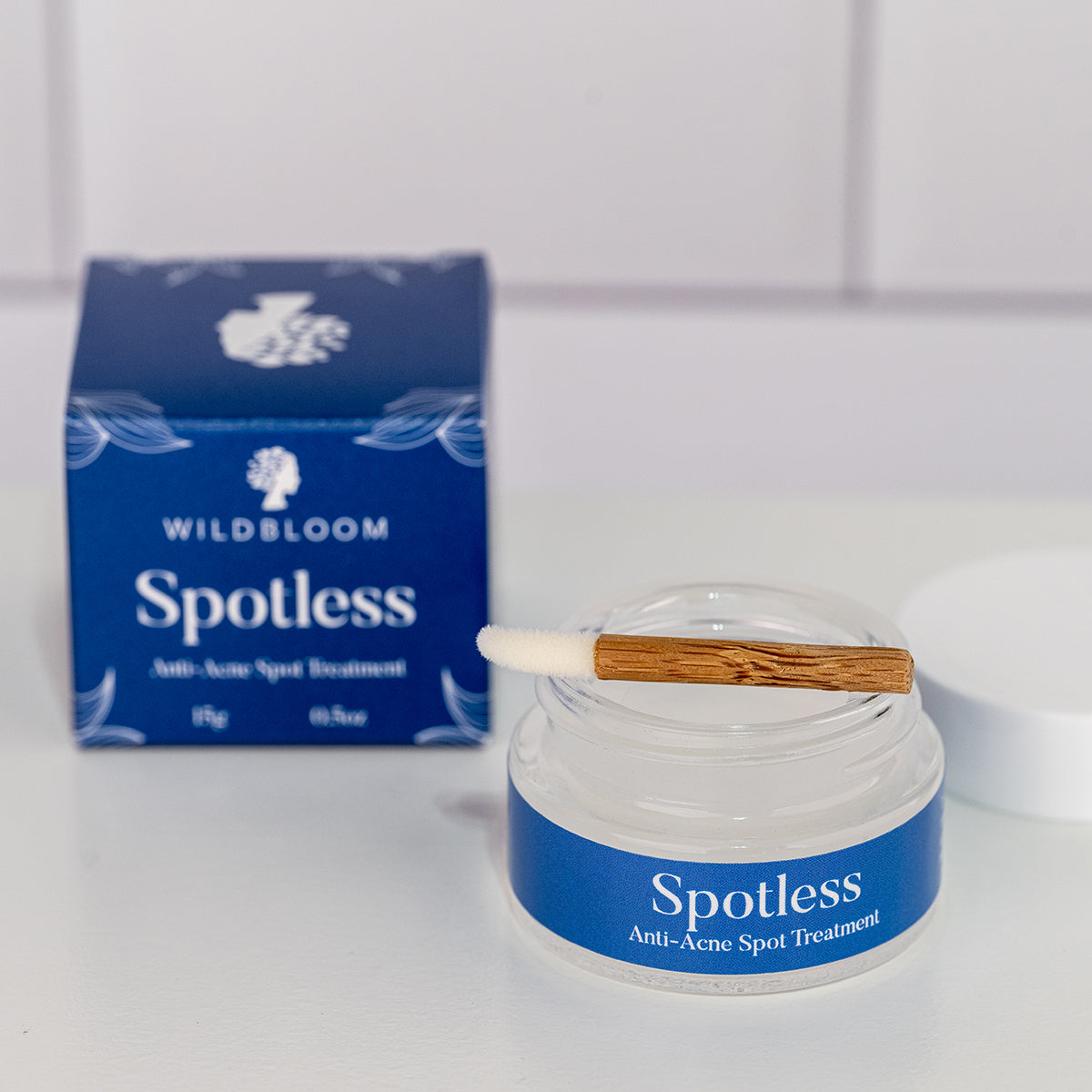
Spotless | Anti-Acne Spot Treatment →
A barrier-repair protocol for plant-based routines:
- Cut back to cleanse, moisturize, and sunscreen for 7 to 10 days. Drop the exfoliant and the spot treatment.
- Look for barrier-supporting ingredients in your moisturizer: ceramides, squalane (often olive- or sugarcane-derived), shea butter, oat extract, panthenol. Not acne treatments, but they let your actives work without triggering a reaction.
- Reintroduce one active at a time, starting with the gentlest (usually niacinamide or azelaic acid) before adding an exfoliant.
- Do not scrub your way out of flaking. Flaking from a damaged barrier is not dead skin that needs removal; it is skin that needs moisture.
Adapting the Routine for Hormonal Breakouts
Breakouts along the jawline and chin that flare on a predictable monthly cycle are hormonal, not bacterial. No cleanser fixes that alone.
What a plant-based routine can do for hormonal acne:
- Reduce the inflammatory response so each breakout is smaller, less painful, and fades faster. Green tea, licorice root, and azelaic acid earn their place here.
- Avoid making it worse. Harsh scrubs and alcohol toners increase irritation and PIH without touching the hormonal driver.
- Support consistency. Hormonal acne responds to routine more than any single product. The same four steps daily for eight to twelve weeks is the realistic timeline.
Natural Skincare for Teen Acne Breakouts
Natural skincare for teen acne breakouts needs to be simple, safe, and forgiving. Teen skin is already changing fast. Piling on strong products makes it worse.
Three rules for teen routines:
- Keep it to three steps. Cleanse, tone, moisturize. That is enough.
- Avoid alcohol-based toners. They dry skin out and trigger more oil.
- Start with the gentlest option first. You can always add more later.
Common Mistakes to Avoid with Plant Based Acne Treatment
Other mistakes that slow progress:
- Over-cleansing. Washing more than twice a day strips your skin and backfires.
- Skipping moisturizer. Dry skin produces more oil, not less.
- Mixing too many actives. Tea tree oil plus glycolic acid plus lactic acid equals irritation.
- Picking at breakouts. This spreads bacteria and leaves scars that outlast the pimple.
- Ignoring sunscreen. UV damage makes dark spots darker and lingers for months.
Budget matters too. A drugstore cleanser plus one good spot treatment often beats a cabinet of half-used bottles. Spend where it counts: cleanser, spot treatment, sunscreen.
Frequently Asked Questions
What is the gentlest acne treatment for sensitive skin?
The gentlest approach uses plant-based ingredients that calm inflammation without stripping the skin barrier. Look for soothing agents like aloe vera, green tea extract, and witch hazel. A routine built around a gentle cleanser, a balancing tonic, and a spot treatment with glycolic acid from natural sources can clear breakouts while respecting sensitive skin. Avoid harsh scrubs and high concentrations of synthetic acids.
How do plant-based ingredients help reduce acne inflammation?
Many botanical extracts have natural anti-inflammatory and antibacterial properties. For example, tea tree oil targets acne-causing bacteria, while licorice root and turmeric soothe redness. These ingredients work with your skin's microbiome rather than against it, reducing the likelihood of irritation that can worsen breakouts. A plant based acne treatment often combines several of these extracts for a synergistic effect.
How long does it take to see results from a gentle plant based acne treatment?
Results vary by skin type and consistency, but effective results are visible within one day to three months. Plant-based formulas work gradually by supporting the moisture barrier and regulating sebum, so patience is key. Using products as directed, like the Spotless spot treatment up to twice daily, can speed visible improvement.
Can a plant-based routine help with acne-related dark spots?
Yes. Ingredients like glycolic acid, lactic acid, and vitamin-rich botanical extracts gently exfoliate and brighten post-acne marks. A routine that includes a gentle cleanser, a tonic with organic fruit acids, and a spot treatment can fade dark spots over time. Consistent use and daily sun protection are essential to prevent new spots from darkening.