

Last Updated: November 22, 2026
Quick Summary
To choose a serum for combination skin, pick a lightweight, water-based formula with humectants like hyaluronic acid and glycerin, plus barrier support such as niacinamide, and skip heavy oils and fragrance. Patch test it on your inner forearm once daily for seven to 10 days before using it on your full face.
- Combination skin has an oily T-zone and drier cheeks, so one formula must hydrate without heavy oils.
- Look for hyaluronic acid, sodium hyaluronate, niacinamide, glycerin, aloe, and chamomile in the formula.
- Avoid heavy occlusives, synthetic fragrance, daily high-strength acids, and alcohol-heavy formulas.
- Apply a small coin-sized amount to the inner forearm once daily for seven to 10 days.
- Use one to two pumps of serum for the entire face and neck, then follow with a light moisturizer.
Table of Contents
- Why Combination Skin Needs a Different Kind of Serum
- Serum Ingredients for Combination Skin: What to Look For and What to Skip
- How to Patch Test a New Face Serum Before It Touches Your Whole Face
- Matching the Formula to Your Skin: Lightweight Gels, Oils, and Everything Between
- How to Layer Serum with Moisturizer Without Weighing Down Oily Zones
- Building a Simple Routine Around Your New Serum
- Find Your Balance with WildBloom
- Frequently Asked Questions
Why Combination Skin Needs a Different Kind of Serum
Combination skin is a skin type that has both oily and dry areas on the same face, usually an oily T-zone and drier cheeks. That split makes choosing a serum for combination skin harder than picking one for a single skin type.
At WildBloom Skincare, we hear the same frustration often. A rich serum that rescues dry cheeks can leave the forehead and nose feeling slick by noon. A light gel that calms the T-zone can leave the cheeks tight and flaky. One product, two opposite needs.
Below, we break down exactly how to choose a serum for combination skin, from reading your own face to patch testing and layering. The steps are simple, and they work with what you already have in your routine.
Oily T-Zone, Dry Cheeks: Two Skin Types on One Face
Your T-zone, the forehead, nose, and chin, holds more oil glands. Your cheeks and jawline often hold fewer. That is why one area shines while another feels rough.
The fix is not two separate routines. It is one formula that hydrates without heavy oils. Look for lightweight textures and ingredients that help hydrate the skin. Think glycerin, hyaluronic acid, and soothing botanicals. Skip thick creams and heavy silicones that sit on top of the skin.
A common mistake is treating the whole face like the oiliest part. That starves the cheeks. The reverse, treating everything as dry, overloads the T-zone.
Serum Ingredients for Combination Skin: What to Look For and What to Skip
The best serum ingredients for combination skin are lightweight hydrators and barrier supporters that add moisture without clogging pores. You want water-loving humectants first, then gentle plant oils in small amounts.
Here is what earns a spot in your formula:
- Hyaluronic acid and sodium hyaluronate: pull water into the skin without oil
- Niacinamide (vitamin B3): helps balance tone
- Glycerin: a simple, reliable humectant
- Aloe and chamomile: calm redness and soothe reactive zones
- Light oils like camellia and avocado: nourish dry patches without heaviness
And here is what to be cautious with:
- Heavy occlusives that trap oil on the T-zone
- Synthetic fragrance, which can irritate sensitive skin
- High-strength acids used daily, which can strip the barrier
- Alcohol-heavy formulas that leave cheeks tight
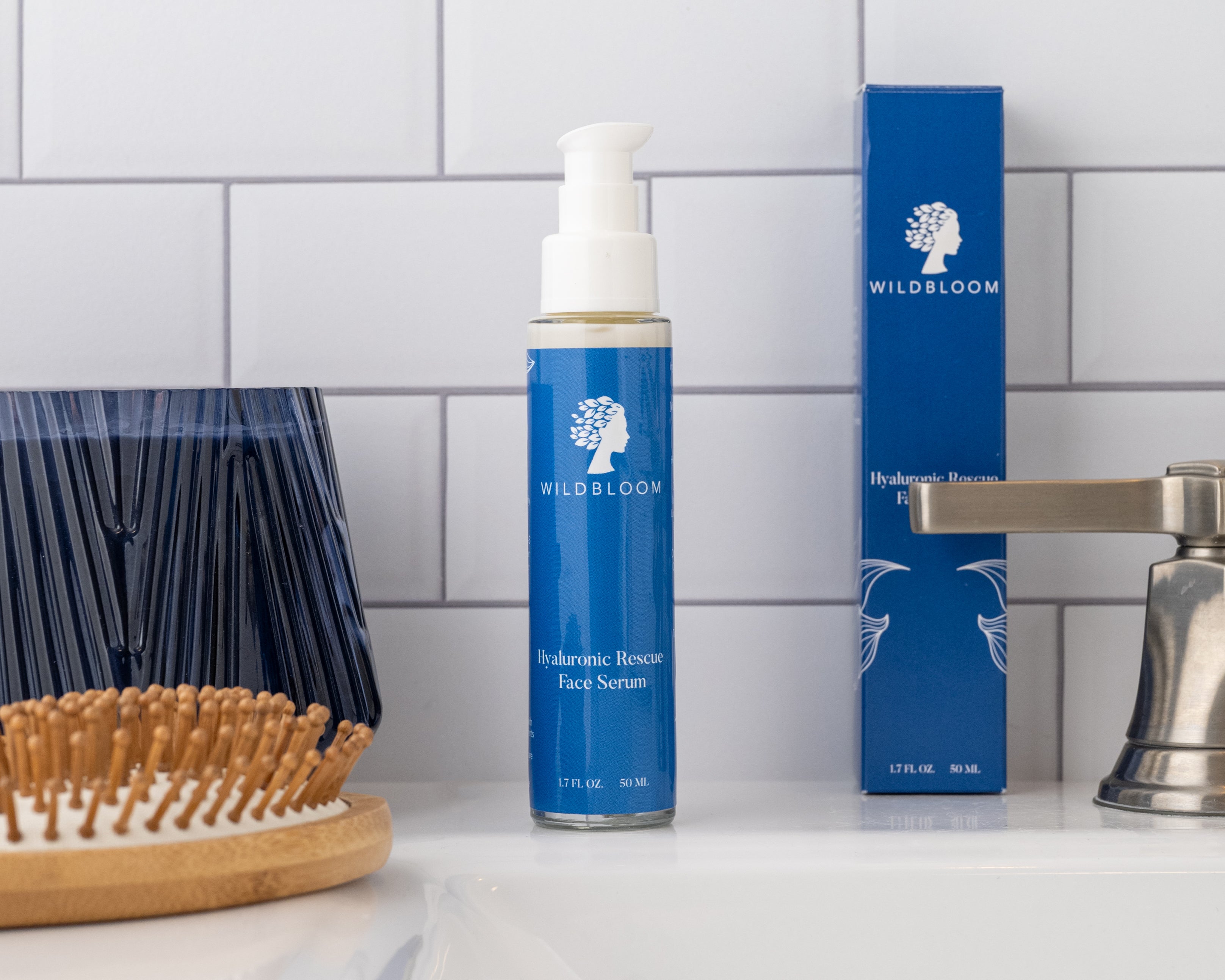
Our Rescue Face Serum is built around this idea. It pairs hyaluronate and B3 with avocado oil and aloe, and it absorbs quickly.
A Quick Ingredient Checklist
Use this before you buy:
- Water-based humectant listed near the top
- Barrier support like niacinamide or beta glucan
- Light plant oils, not heavy butters
- No synthetic fragrance or drying alcohol
- A texture described as light or fast-absorbing
If a label hits four of these five, it is worth a patch test.
How to Patch Test a New Face Serum Before It Touches Your Whole Face
How to patch test a new face serum: apply a small amount to a clean test spot, leave it on, and watch for a reaction over several days before using it on your full face. This one step protects your skin barrier and saves you from a full-face reaction.
A leave-on serum is different from a cleanser or a mask. It stays on the skin for hours, often under moisturizer and sunscreen, and it may contain active ingredients that build up with repeated use. That is why a single 24-hour check is not enough for most serums. Use this serum-specific protocol:
- Choose a test spot. The inner forearm is the safest, easiest-to-watch area. The side of the neck or the jawline gives a closer match to facial skin, but those areas are more visible, so reserve them for a second round if the forearm test is clear.
- Clean and dry the skin. Use a gentle cleanser and pat dry. Do not apply toner, moisturizer, or any other product to that spot during the test.
- Use a small amount. A thin layer about the size of a small coin is enough. Serums are concentrated, so more is not better for a test.
- Apply once and leave it on. Do not rinse a leave-on serum. Let it absorb fully before dressing.
- Keep the area dry and undisturbed for the first few hours. Avoid tight clothing, scratching, or washing the spot.
- Repeat once daily for seven to 10 days. Apply the same small amount at the same time each day. This matters because some reactions, especially to active ingredients, appear only after repeated exposure.
- Monitor the skin for redness, itching, burning, stinging, swelling, or hives. Take a photo each day if you want a clear record.
Watch out: testing a serum on the same day you try a new cleanser or moisturizer makes it impossible to know which product caused a reaction. Introduce one new product at a time and give each a full test window.
What Different Testing Timelines Can and Cannot Establish
A 24-hour check can catch a fast irritation or a strong immediate reaction, but it cannot rule out delayed reactions or sensitivity that builds with repeated use. A seven- to 10-day test with daily application is better for leave-on serums because it mimics real use. No at-home test can prove a product will never cause a reaction, but a longer, repeated-use test gives you more reliable information than a single spot check.
How to Test a Serum Within Your Routine
Once the test spot is clear after seven to 10 days, apply the serum to one small area of the face, such as the jawline on one side, for another three to five days before using it on the full face. Keep the rest of your routine unchanged during this step. If you use a moisturizer over the serum, use the same one you always use so you are not introducing a second variable. This staged approach is slower, but it matches how the product will actually be used and makes any reaction easier to trace.
Matching the Formula to Your Skin: Lightweight Gels, Oils, and Everything Between
Texture matters as much as ingredients for combination skin. A gel suits oily zones, a light lotion balances both, and a facial oil works best as a finisher on dry patches only.
Here is how to match the format to your face:
| Formula Type | Best For | Watch Out For |
|---|---|---|
| Lightweight gel | Oily T-zone, humid weather | Can feel tight on dry cheeks |
| Water-based serum | Most combination skin | Needs a moisturizer on top |
| Light facial oil | Dry cheeks, winter | Too heavy for the full face |
| Rich cream | Very dry patches only | Clogs oily zones |
Our serum collection covers these textures, so you can pick the finish that matches your skin. If your cheeks run dry and your T-zone runs oily, a water-based serum with a drop of light oil pressed only on the cheeks is a reliable middle path.
How to Layer Serum with Moisturizer Without Weighing Down Oily Zones
How to layer serum with moisturizer: apply the serum first to clean skin, let it absorb, then add a light moisturizer, and keep heavier products on the dry areas only. Order and amount matter more than the number of steps.
Follow this sequence:
- Cleanse with a gentle wash.
- Tone if you use one, and let it dry.
- Serum in a thin layer, warmed between your fingertips.
- Moisturizer once the serum has absorbed.
- Oil on dry patches only, if needed.
A common mistake is applying a full pump of serum to the whole face. Our serums are highly concentrated, so one to two pumps should be enough for your entire face and neck. If it feels like you have a mask on, you have used too much.
When you shop for a moisturizer, choose a light lotion for daytime and save richer textures for the cheeks at night.
Building a Simple Routine Around Your New Serum
A simple routine beats a ten-step one for combination skin. Fewer products mean fewer chances to overload the T-zone or strip the cheeks.
Start with three steps: cleanse, serum, moisturize. Add a toner or oil only if your skin asks for it. Introduce one new product at a time, and give each two weeks before judging results. Our guide on how to simplify your skincare routine walks through trimming steps without losing results.
Watch out: adding a serum, an acid, and a new oil in the same week makes it impossible to know what caused a reaction. Space them out.
Find Your Balance with WildBloom
Combination skin does not need a complicated shelf of products. It needs one balanced serum, a light moisturizer, and a patient patch test.
If you are ready to build that routine, start with our Normal Combination selection, curated for skin that is oily in some zones and dry in others. Every WildBloom formula is made without synthetic fragrance, parabens, or phthalates, and crafted in small batches for freshness. Our lightweight serums absorb quickly, so both halves of your face get what they need.
Get started with WildBloom Skincare and find the serum that balances your skin without weighing it down.
Choosing a serum for combination skin comes down to reading your own face, checking the label, and testing before you commit. WildBloom Skincare makes that easier with light, barrier-friendly formulas and a curated selection for combination skin. Explore our fragrance-free serums and small-batch skincare to build a routine that keeps your T-zone calm and your cheeks comfortable.
Frequently Asked Questions
How do I choose a serum for combination skin?
Start by identifying what your skin needs most: hydration in dry areas, oil control in the T-zone, or both. Look for a lightweight serum for combination skin with ingredients like hyaluronic acid and niacinamide, which hydrate without adding oil. Avoid heavy formulas and high concentrations of drying alcohols. Patch test on your inner forearm for 24 hours, then on your jawline for a few days before applying it to your full face.
Which ingredients are best for combination skin?
Hyaluronic acid and glycerin draw water into dry zones without greasing oily ones. Niacinamide supports the skin barrier and can help balance oil production. Aloe leaf juice and neem oil calm redness and inflammation. For the dry patches, lightweight oils like avocado and camellia seed absorb quickly. Skip heavy occlusives and strong fragrances if your cheeks are sensitive, and introduce one new product at a time so you can tell what works.
Should I use different serums on different areas of my face?
You can, but it is not required. A single lightweight, hydrating serum usually suits both zones. If your T-zone is very oily, apply a thinner layer there and a slightly richer layer on your cheeks. If you use two serums, apply the thinner one first and let it absorb for about a minute before the next. Keep a simple routine so you can track what your skin responds to.
How often should I use a serum on combination skin?
Start with once daily, usually in the evening, for the first one to two weeks. If your skin tolerates it well, add a morning application. A hydrating serum can be used twice daily. If the serum contains active ingredients, begin two to three times per week and build up gradually. Stop and wash off if you notice burning, stinging, swelling, or a rash that does not settle within a day.
