

Table of Contents
- Why Plant Based Skincare for Acne Is Worth Trying
- Building a Plant-Based Acne Skincare Routine That Works
- Natural Ingredients for Acne-Prone Skin: What Actually Helps
- Aloe Vera for Acne-Prone Skin: Soothing Relief That Works
- Natural Skincare for Teen Acne Breakouts
- Common Mistakes to Avoid With Plant Based Skincare for Acne
- When to See a Dermatologist
- Frequently Asked Questions
Last Updated: October 6, 2026
Why Plant Based Skincare for Acne Is Worth Trying
Plant based skincare for acne is a gentler path to clearer skin, built on botanical ingredients that calm inflammation and rebalance oil instead of stripping your skin.
The appeal is real. Conventional acne products often rely on harsh actives that leave skin red, tight, and irritated. Plant-based formulas take a different route.
That doesn't mean every botanical product works. Some do very little. The trick is knowing which ingredients earn their place, and how to build a routine around them.
Below, we'll walk you through a simple three-step routine, the ingredients worth your money, and the mistakes that sabotage even good products.
Building a Plant-Based Acne Skincare Routine That Works
A plant-based acne routine works when it follows a consistent order and a realistic frequency. Skipping the moisturizer is the most common error we see, because dry skin produces more oil, not less. The second most common error is starting five new products at once and having no idea which one caused the breakout.
Here's a full morning and evening routine, plus how to introduce it without triggering a purge or a reaction.

Morning Routine
- Cleanse. A gentle gel cleanser with lukewarm water. If your skin feels tight afterward, the cleanser is too harsh. Look for sulfate-free formulas with activated charcoal or fruit extracts that lift oil without stripping.
- Treat (optional). A botanical spot treatment on active blemishes only, not the whole face. Glycolic acid paired with soothing botanicals like rosewater dissolves dead cells while calming redness.
- Moisturize. A lightweight, non-comedogenic cream. This is non-negotiable even for oily skin.
- Sunscreen. Broad-spectrum SPF 30 or higher. Many botanical actives, including glycolic acid and willow bark, increase sun sensitivity. Skipping SPF undoes the rest of the routine.
Evening Routine
- Cleanse. Same gentle cleanser. If you wore sunscreen or makeup, consider a double cleanse: an oil-based balm first, then the gel cleanser. Rinse thoroughly.
- Treat. Spot treatment on blemishes. If you're using a leave-on exfoliant like salicylic acid, alternate nights with the spot treatment rather than layering them.
- Moisturize. Same cream as morning, or a slightly richer version if your skin feels dry.
How Often to Use What
| Step | Frequency | Notes |
|---|---|---|
| Gentle cleanser | Twice daily | Morning and night |
| Botanical spot treatment | Up to twice daily | Blemishes only, not full face |
| Exfoliating acid | 2-3 nights per week | Start with one night, build up |
| Moisturizer | Twice daily | Never skip |
| Sunscreen | Every morning | Reapply if outdoors |
How to Introduce New Products Without a Reaction
This is where most routines fall apart. Follow this order:
- Start with the basics. Cleanser, moisturizer, and sunscreen for two weeks. No actives. This gives you a baseline.
- Add one active at a time. Wait at least one to two weeks before adding the next. If something goes wrong, you'll know what caused it.
- Patch test first. Apply a small amount behind your ear or on your inner forearm for 24 to 48 hours before using it on your face.
- Start low, go slow. Use a new active every other night before moving to nightly. If your skin stings, flakes, or turns red, back off.
What a Purge Looks Like vs. a Reaction
A purge is a temporary worsening of acne in the areas you normally break out, usually within the first two to four weeks of starting an exfoliating active. It settles as the skin adjusts.
A reaction is different. It shows up as redness, itching, burning, or breakouts in new areas, often within hours to days. Stop the product and simplify your routine until your skin calms down.
Adjusting for Skin Type
- Oily skin. Gel cleanser, lightweight lotion, and a niacinamide serum for oil control.
- Dry or dehydrated skin. Cream cleanser, richer moisturizer, and skip the morning cleanse if your skin feels tight.
- Sensitive or reactive skin. Fragrance-free everything, one active at a time, and patch test every new product.
- Combination skin. Treat zones differently: lighter moisturizer on the T-zone, richer on cheeks.
Natural Ingredients for Acne-Prone Skin: What Actually Helps
Most roundups lump every botanical into one "natural is better" pile. That's not useful when you're standing in a store aisle or scrolling a product page. A more honest approach is to sort ingredients by how much real evidence sits behind them, then match them to your skin's tolerance.
Ingredients With the Strongest Support
A few plant-derived actives have enough research behind them that dermatologists routinely mention them alongside conventional options:
- Tea tree oil. Several controlled trials have compared diluted tea tree oil to benzoyl peroxide for mild to moderate acne, and the results were broadly similar, though tea tree worked more slowly and caused fewer side effects like dryness and stinging. It's typically used at around 5% concentration. Higher isn't better; it's more irritating.
- Green tea extract. Topical green tea has been studied for its anti-inflammatory and sebum-reducing effects. It shows up in toners and serums, and it plays well with other actives because it's rarely irritating.
- Niacinamide. Not a plant extract, but a plant-derived vitamin B3 form found in many botanical lines. It supports the skin barrier and helps regulate oil. Most formulas use 2% to 5%; higher concentrations can sting sensitive skin.
- Azelaic acid. Originally derived from grains. It's prescription-strength at 15% to 20% and available over the counter at lower concentrations. It addresses both acne and post-inflammatory redness, which is why it's a favorite for people who can't tolerate stronger retinoids.
- Salicylic acid from willow bark. Willow bark contains salicin, which the skin converts to salicylic acid. The conversion is inefficient, so willow bark extract is gentler than a straight 2% salicylic acid solution, but also slower. That trade-off is fine for sensitive skin and frustrating for stubborn breakouts.
Ingredients Backed Mostly by Tradition
These aren't useless, but the evidence is thinner than the marketing suggests:
- Aloe vera. Good for soothing and hydration. Weak as a standalone acne treatment.
- Chamomile. Calming, but the effect is modest and short-lived.
- Lavender oil. Often included for scent. It can be a sensitizer, and there's no strong acne-specific evidence.
- Witch hazel. Astringent and temporarily tightening. Overuse strips the barrier.
- Coconut oil. Antibacterial in a lab dish, but highly comedogenic on facial skin. A common trigger for clogged pores.
The Non-Comedogenic Trap
Plant-derived does not mean non-comedogenic. Many botanical oils, including coconut, wheat germ, and some citrus-derived emollients, rank high on comedogenicity scales. If your skin clogs easily, scan the ingredient list for heavy oils and look for products labeled non-comedogenic rather than assuming "natural" covers it.
Fragrance is the other quiet offender. Essential oils like citrus, mint, and eucalyptus add a pleasant scent and a real risk of contact dermatitis. If your skin is reactive, fragrance-free botanical formulas are usually the safer bet.
How to Read a Label
A few practical rules:
- Ingredients are listed by concentration. If the botanical you want sits below the preservative (often phenoxyethanol or sodium benzoate), it's likely there for label appeal, not effect.
- "Proprietary blend" hides amounts. Treat it as a marketing term, not a guarantee.
- Match the active to your goal. Exfoliation: willow bark or low-dose salicylic acid. Oil control: niacinamide. Redness: azelaic acid or green tea. Soothing: aloe or chamomile.
Realistic Expectations
Plant-based actives tend to work more slowly than prescription retinoids or benzoyl peroxide. Most people see meaningful change over four to eight weeks, not four to eight days. If your acne is severe, cystic, or scarring, botanicals work best alongside a dermatologist's plan rather than instead of one.
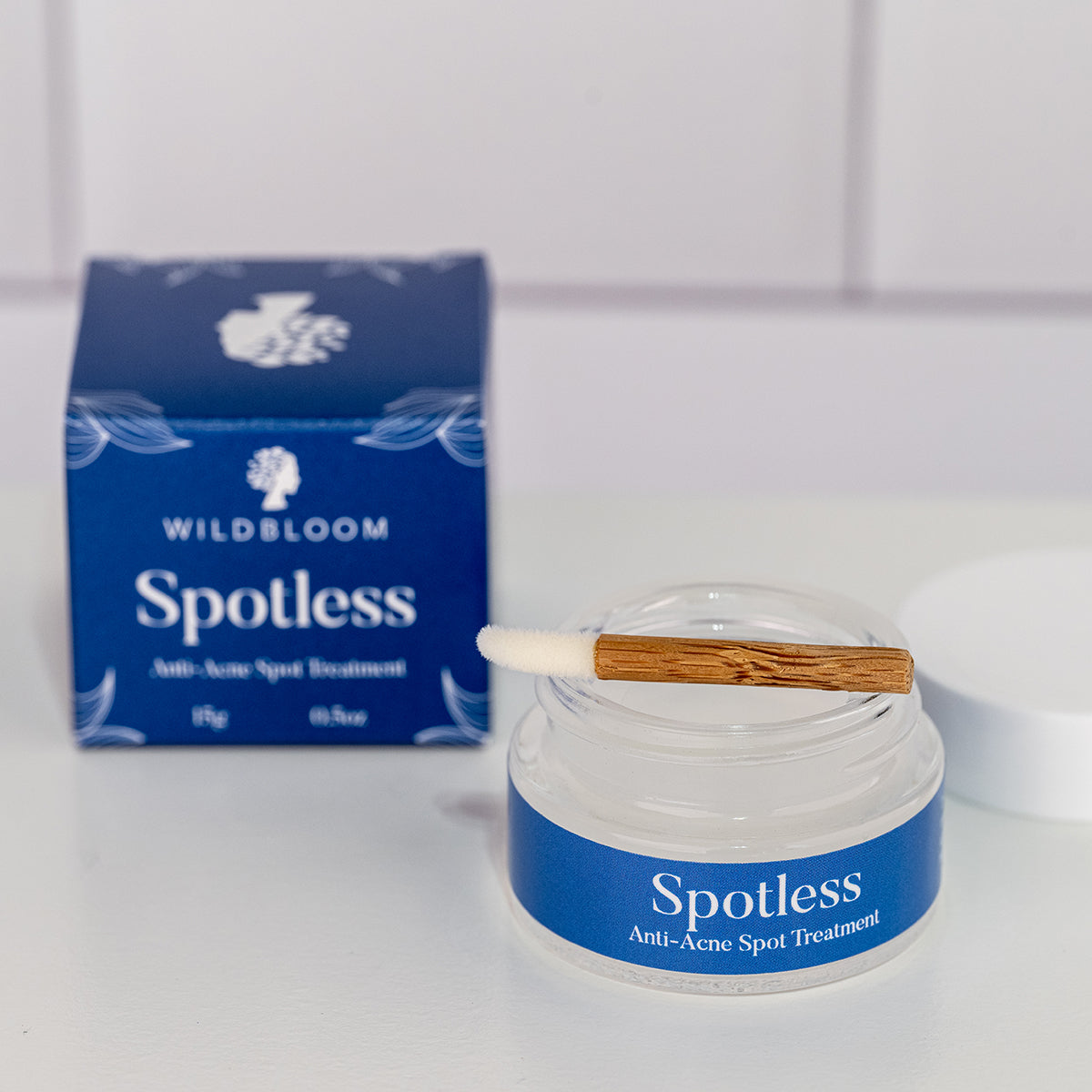
Spotless | Anti-Acne Spot Treatment →
Aloe Vera for Acne-Prone Skin: Soothing Relief That Works
Aloe vera for acne-prone skin earns its reputation as a calming agent. The gel is rich in compounds that reduce redness and support skin repair, making it useful after breakouts or alongside drying treatments.
It won't clear acne on its own. Think of aloe as a support player: it soothes the irritation that makes breakouts look and feel worse, and it hydrates without adding oil. That combination makes it a smart addition to a plant-based routine, especially for sensitive or reactive skin.
You'll find aloe in toners, gels, and moisturizers. Look for it near the top of the ingredient list if soothing is your goal.
Natural Skincare for Teen Acne Breakouts
Natural skincare for teen acne breakouts needs to be gentle, simple, and consistent. Teen skin is already changing, and harsh products can make breakouts and irritation worse. A basic cleanse-treat-moisturize routine works as well for teens as it does for adults.
Keep it to three steps. Teens rarely stick with a ten-step regimen, and they don't need one. A gentle cleanser, a spot treatment used only on blemishes, and a light moisturizer cover the essentials.
One caution: teen acne can be stubborn and sometimes needs medical care. For a complete routine in one box, our Purifying Skin Care Set bundles a cleanser, tonic, and moisturizer for oily and combination skin.

Common Mistakes to Avoid With Plant Based Skincare for Acne
The biggest mistake with plant based skincare for acne is expecting overnight results. Botanical routines work gradually, often over several weeks. Abandoning a product after a few days means you never give it a fair chance.
Other common errors:
- Over-cleansing, which strips the skin and triggers more oil
- Skipping moisturizer because skin feels oily
- Mixing too many active ingredients at once
- Ignoring non-comedogenic labels on oils and creams
- Using harsh scrubs that spread bacteria and irritate skin
A common mistake is treating acne as a hygiene problem. It isn't. Breakouts come from oil, bacteria, inflammation, and hormones, not from being unclean. Gentle consistency beats aggressive scrubbing every time.
When to See a Dermatologist
See a dermatologist if your acne is severe, painful, or leaving scars, or if plant-based products haven't helped after two to three months. Some acne needs prescription treatment, and that's not a failure of natural skincare.
Red flags worth a professional visit include deep cystic bumps, acne that suddenly worsens, and breakouts accompanied by other symptoms. According to the American Academy of Dermatology, acne is the most common skin condition in the country, and effective treatment often combines approaches.
Plant-based skincare can work alongside prescription treatments. A gentle cleanser and moisturizer support the skin barrier while medication does its job. Just check with your dermatologist before adding new products, since some botanicals can interact with prescription actives.
Frequently Asked Questions
Is plant-based skincare good for acne?
Plant-based skincare can help acne when formulas target clogged pores, excess oil, and inflammation. Ingredients like glycolic acid from plant sources, tea tree oil, and willow bark extract address breakouts without harsh sulfates. The key is choosing non-comedogenic products and patch testing first. Plant-based options work best as part of a consistent routine, not as a single miracle product.
How long does it take for a plant-based acne routine to work?
Most people see initial improvements in two to four weeks, with clearer results by eight to twelve weeks. Plant-based ingredients often work more gently than prescription treatments, so patience matters. Track changes with photos every two weeks. If breakouts worsen or don't improve after three months, consult a dermatologist about whether your routine needs adjustment or medical treatment.
Can aloe vera help acne-prone skin?
Aloe vera soothes inflammation and calms redness associated with breakouts. It provides lightweight hydration without clogging pores, making it suitable for oily and combination skin. Aloe won't clear active acne on its own, but it supports healing and reduces irritation when combined with cleansing and treatment steps. Look for aloe as a primary ingredient in toners or moisturizers rather than relying on raw gel alone.
What should teens avoid in natural acne skincare?
Teens should avoid products with synthetic fragrance, drying alcohols, and harsh scrubs that damage the skin barrier. Heavy oils like coconut oil can clog pores for some people. Choose non-comedogenic, fragrance-free formulas. Start with a simple three-step routine rather than many products. If over-the-counter options don't help within three months, see a dermatologist about prescription options.